


Blog · Food packaging
Packaging spices in paper cans: five decisions to make before you brief a supplier
How to size a spice range in paper cans from fill weight, keep a consistent shelf look, protect aroma and choose the right dispensing closure.
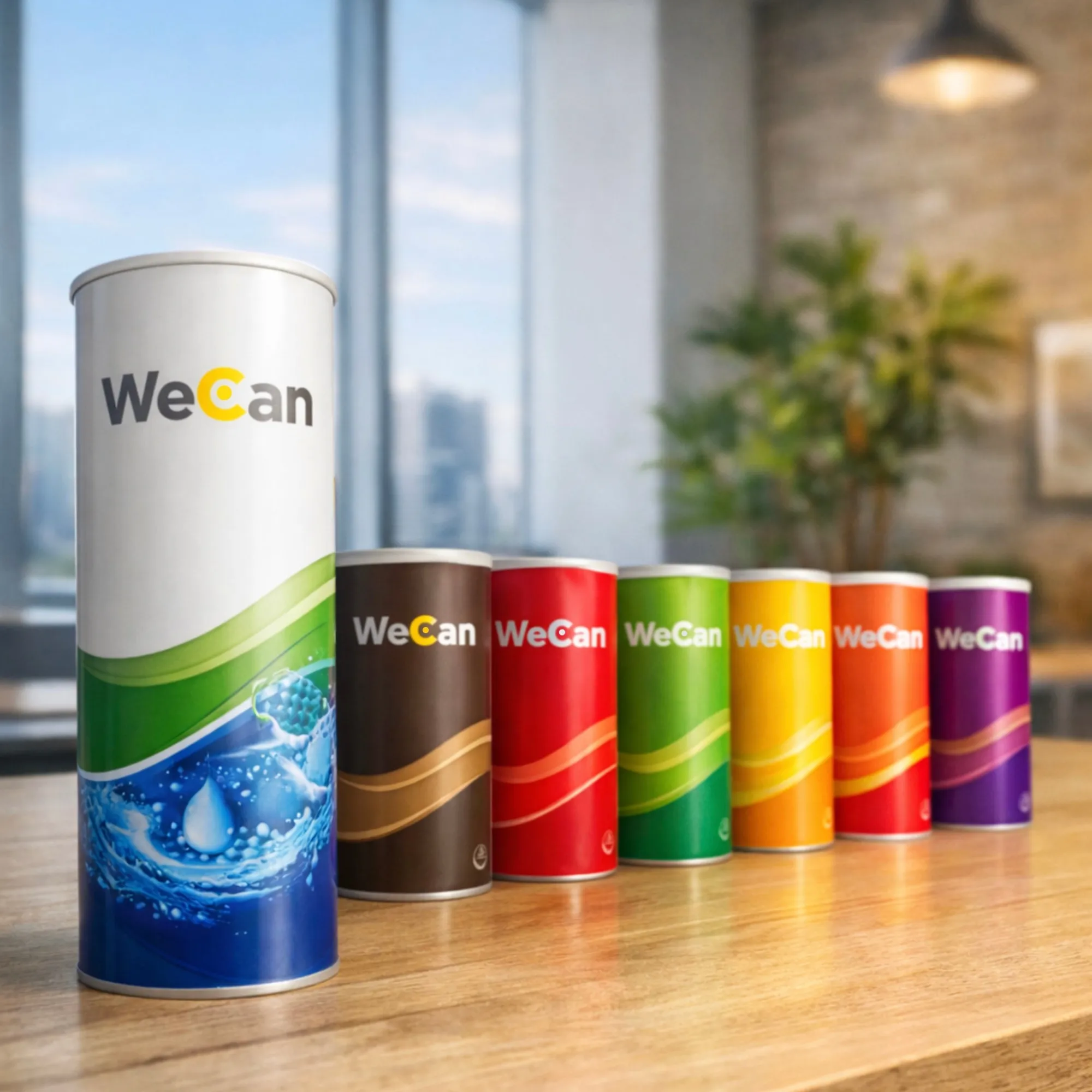
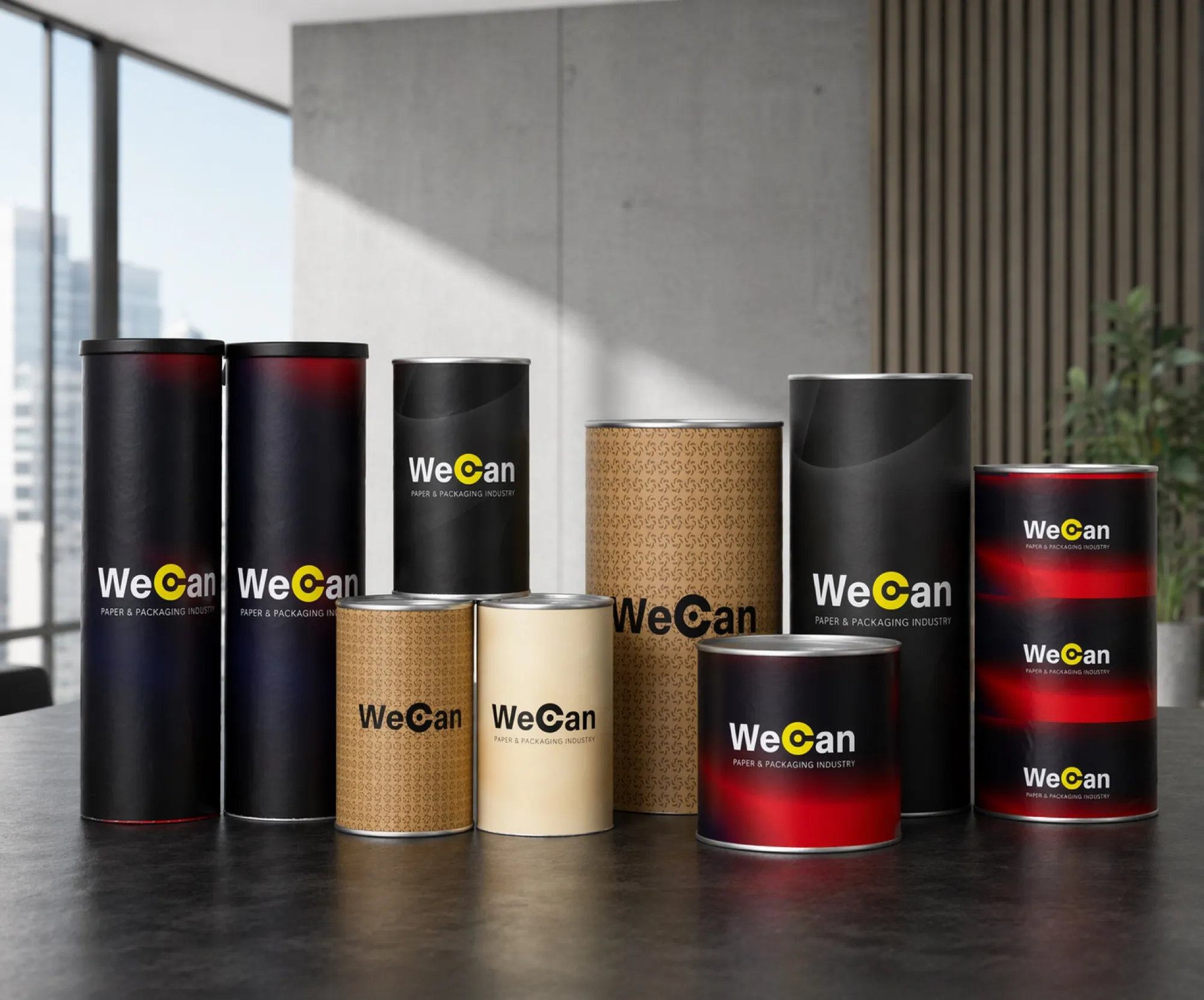
Spice brands are some of the most natural fits for composite paper cans. A row of cylinders creates a strong block on the shelf, the full-wrap label gives room for the story and the regulatory text, and the size can be set for each product in the range.
To get there quickly, it helps to make five decisions before you brief a supplier.
1. Work out the size from the fill weight, not the other way round
The same 100 g can hold very different volumes depending on the product. A coarse blend takes far more space than a fine powder. So start with your product’s bulk density: fill a measuring jug with the product the way your line fills it (settled, not packed down), level it and weigh it.
Then the volume you need is simply the fill weight divided by the density. Add some headspace, because a can filled to the brim is hard to close cleanly and messy to open.
A worked example (illustrative numbers only):
- 250 ml of your blend weighs 120 g, so its bulk density is 0.48 g/ml.
- A 100 g pack needs about 100 ÷ 0.48 ≈ 208 ml of product.
- A can with a 65 mm inner diameter has a cross-section of about 33.2 cm² (π × 3.25²).
- 208 ml ÷ 33.2 cm² ≈ 6.3 cm of fill height, plus headspace.
Your supplier will refine the figures, but arriving with your density and target fill weights saves a round of samples.
2. Keep one diameter across the range
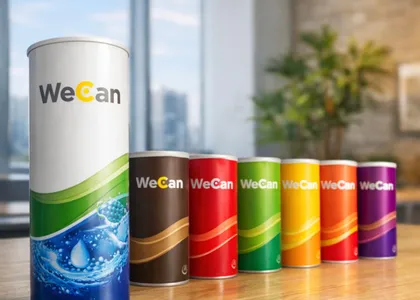
If your range runs from 50 g to 500 g, consider keeping the same diameter and changing only the height. The shelf looks consistent, your labels share a layout, and you need fewer closure sizes. Where the jump in weight is too large for one diameter, two diameters across the range is usually enough.
3. Protect aroma and keep moisture out
Ground spices lose aroma over time and can cake in humidity. Protection comes from the inner liner and from how well the closure seals, especially after the pack has been opened. Gulf supply chains add heat and, in coastal cities, humidity, so test samples in realistic storage conditions rather than in an air-conditioned office.
4. Choose the closure around how people use it
Ask how your customers actually use the product:
- Shaking over food suits a sifter top.
- Spooning suits a wide opening with a reclosable lid.
- Pouring into a grinder or recipe suits a flip or pour opening.
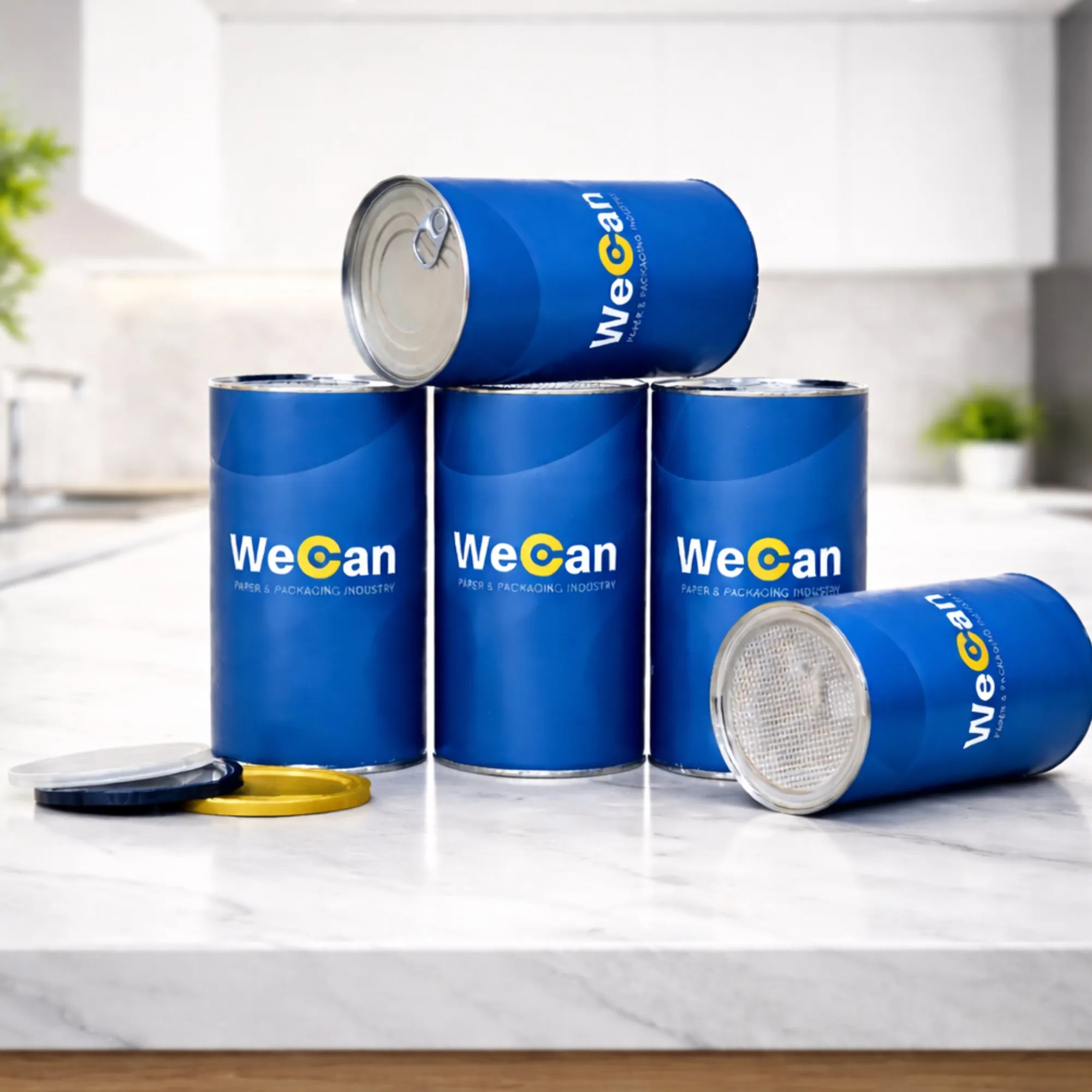
A sealed membrane under the lid keeps the product fresh until first use and shows that the pack has not been opened.
5. Plan the label for two languages
Food labelling in GCC markets generally includes Arabic, and many brands print Arabic and English together. Check the current requirements for each market you sell into with your regulatory adviser, then plan the artwork so both languages fit comfortably around the cylinder without crowding the brand.
A brief your supplier can quote from
- Each product in the range and its target fill weight
- Bulk density, or a sample of the product
- How it is dispensed, and whether it needs to reclose
- How it is filled (by hand or on a line)
- Target markets and estimated monthly quantity per size
Send this through our quote form or read how we work with spice and seasoning brands. To check a diameter against our 52–150 mm range, try the size finder.