

Blog · Paper cores
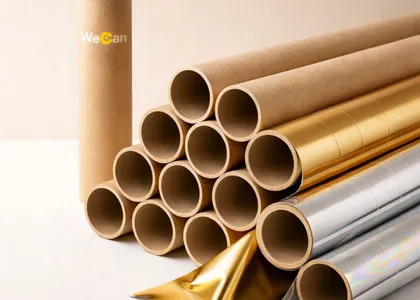
How to choose a paper core for tape, textile and film winding
Inner diameter, wall thickness, length and surface explained. A practical guide to specifying paper cores for adhesive tape, textile and film lines.

A paper core looks like the simplest part of a roll, until it fails. A core that crushes under winding tension, slips on the chuck or arrives slightly oval can stop a converting line or damage the first metres of product.
The good news is that most core problems come down to four specifications. Get these right in the brief and the rest is a conversation with your supplier.
1. Inner diameter: match the machine, not the old core
The inner diameter (ID) has to fit the shaft, chuck or mandrel the core runs on. Measure the equipment rather than copying the size printed on a previous order, because worn cores and rounded-up figures are common.
Many tape and film lines are built around a 76 mm (3 inch) core, and smaller formats often run on around 38–40 mm. Textile and fabric lines vary more by machine. Our current range covers 25–120 mm inner diameter, so tell us the exact figure your equipment needs.
2. Wall thickness: sized for the load
The wall is built up from layers of paperboard. A thicker wall gives more crush strength, which you need for:
- heavier or wider rolls,
- higher winding tension,
- rolls that are stacked or stored on their side for long periods.
If you know the outside diameter (OD) but not the wall, the wall is half the difference: (OD − ID) ÷ 2. If you know neither, tell us what is wound and roughly how much a full roll weighs, and we will recommend a wall.
3. Length and cut quality
Core length is usually the width of your roll or what your machine requires. For tape and slit film, a clean, square cut matters as much as the length itself: a ragged or angled end can mark the product and make rolls sit unevenly.
Agree a length tolerance up front. For most converters, a precise, consistent length across the whole order is worth more than a slightly lower price.
4. Surface: what touches the product
The outer surface is the first thing your material wraps onto. Depending on the application, you may want a smooth surface that does not mark film, or one that helps the first wrap grip. Tell your supplier what is wound and how the roll starts, and ask which finish suits it.
What matters most by application
| Application | What to prioritise |
|---|---|
| Adhesive tape | Exact ID for the chuck, consistent length, clean square cut |
| Textile and fabric rolls | Crush strength for heavy rolls, often longer lengths |
| Flexible film and selected foil | Roundness and surface that will not mark the film |
| Paper and tissue converting | Strength through the run and consistent dimensions |
| Electrical and winding applications | Dimensional consistency matched to the winding process |
Storing cores in the Gulf climate
Paperboard responds to humidity. Cores stored in damp conditions can soften or lose roundness before they reach the line. Keep stock indoors, off the floor and away from open loading bays, especially in humid coastal locations, and use older stock first.
What to send for a quote
- Inner diameter, length and wall thickness (if known)
- What is wound, and the approximate roll weight
- Your machine or chuck type, if the ID is unusual
- Estimated monthly quantity and delivery country
You can send these through our quote form or read more about our paper cores. If you are unsure how to measure, our guide to specifying cans and cores walks through each figure.