

Blog · Composite cans
Composite paper cans or metal cans? How to choose for dry products
When a composite paper can is the better choice for dry food, spices and powders, when metal still makes sense, and the questions to answer first.
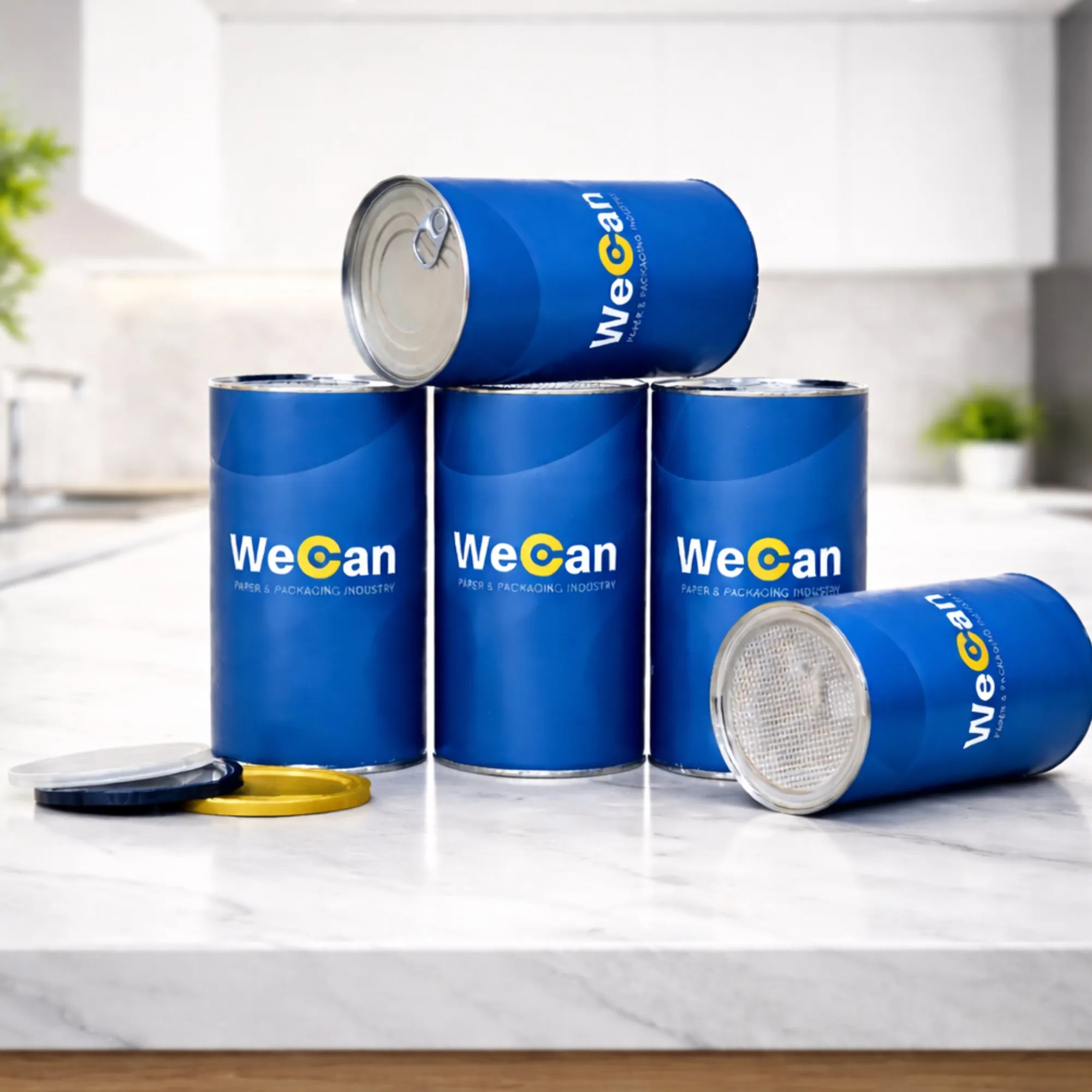
“Should we move from tin to paper?” is a fair question for any brand selling dry products. The honest answer is that it depends less on the material and more on three things: what is inside the pack, how it is filled and processed, and how long it has to survive on the shelf.
This guide sets out where each format tends to fit, so you can walk into a supplier conversation with the right questions.
Where metal cans still make sense
Metal cans are hard to beat when the product is wet, liquid, pressurised or heat-processed in the sealed container. Canned vegetables, soups and drinks are sterilised after sealing, and the pack has to hold a hermetic seal through that process. Aerosols need a pressure-rated container.
If your product falls into one of those groups, a composite paper can is usually the wrong tool, and a good supplier will tell you so.
Where composite paper cans fit well
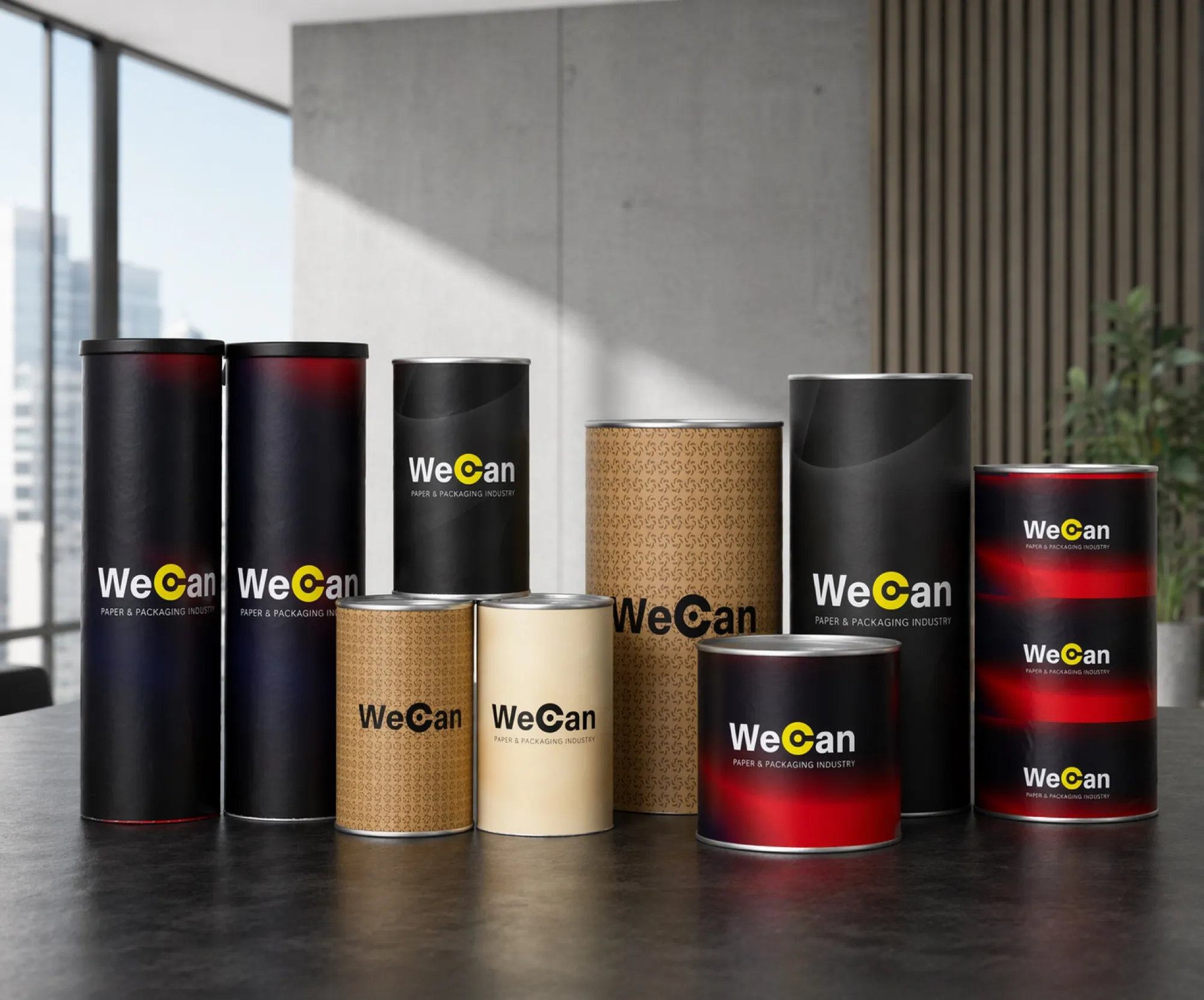
Composite cans are a strong match for dry and low-moisture products: stacked snacks such as potato chips, ground and whole spices, breadcrumbs, baking ingredients, cocoa and hot-chocolate mixes, and other powders.
For these products, buyers usually choose a paper can for some combination of:
- Lower pack weight. A paperboard body is light to handle and to ship, which adds up across a full truck.
- A full-height branding surface. The label wraps the whole body with no seams or ribs, so artwork reads cleanly on the shelf.
- Freedom on size. Diameter and height are made to order rather than chosen from a standard tin list. Our current range for composite cans is 52–150 mm inner diameter, with height developed around the product.
- A paper-based format. Many brands want to reduce the amount of metal or plastic in their range where the product allows it.
Barrier comes from the build, not the label “paper”
The most common misunderstanding is that a paper can is automatically weaker against moisture or aroma loss than metal. In practice, barrier performance depends on the full construction: the inner liner, the bottom end, the top closure and how they are sealed together.
A plain paper liner may be fine for a product that is not sensitive to humidity. A moisture- or aroma-sensitive product needs a more protective liner and a closure that seals properly between uses. The only reliable way to know is to specify the build for your product and test it with your real fill, in the conditions it will be stored in.
That matters in the Gulf, where packs can sit in hot warehouses and humid coastal cities before they reach the shelf.
A quick comparison
| Product type | Usually a better fit | Why |
|---|---|---|
| Stacked snacks (chips, crisps) | Composite paper can | Rigid tube protects against crushing; large print area |
| Ground spices and seasoning blends | Composite paper can | Light, brandable, sized per fill weight; closure chosen for dispensing |
| Baking ingredients, breadcrumbs, cocoa mixes | Composite paper can | Dry products that suit a lined paper body |
| Highly moisture-sensitive powders | Either, depending on the build | Needs a high-barrier liner and seal; test before deciding |
| Selected lubricants and industrial products | Composite can, after technical review | Works for some products; depends on consistency and handling |
| Liquids, wet foods, retorted products | Metal (or another rigid format) | Needs a hermetic, heat-resistant container |
Five questions to answer before you switch
- How sensitive is the product to moisture, oxygen and aroma loss? This drives the liner and closure.
- How is it filled? By hand, on a semi-automatic line or on a high-speed line. The can has to suit your equipment.
- How does the customer open and reclose it? A one-time membrane, a reclosable lid, a sifter or a scoop all change the top end.
- What shelf life do you need, and where will it be stored? Plan for the hottest, most humid point in your supply chain.
- What would make the switch worth it? Lower freight cost, a stronger shelf presence, or a paper-based story. Knowing the goal helps your supplier recommend the right compromise.
A note on recyclability claims
Composite cans can combine several materials depending on the liner and ends. We only describe a pack as recyclable when the full approved construction and a local recycling route support it, and we recommend brands apply the same test to their own on-pack claims.
Next step
If you are weighing up a switch, send us the product, your current pack size and your estimated monthly quantity. We will review whether a composite can is suitable and recommend a construction to test. You can start with our composite paper cans page or request a quote directly.