

Blog · Ordering
Ordering custom paper cans or cores in the GCC: from first brief to repeat supply
What happens between your first enquiry and recurring supply of custom paper cans or cores, what to send at each stage and how to avoid common delays.
Custom packaging is not ordered from a catalogue. Because the size and build are developed around your product, there are a few stages between the first enquiry and a pallet arriving at your warehouse. Knowing what each stage needs from you is the easiest way to shorten the whole process.
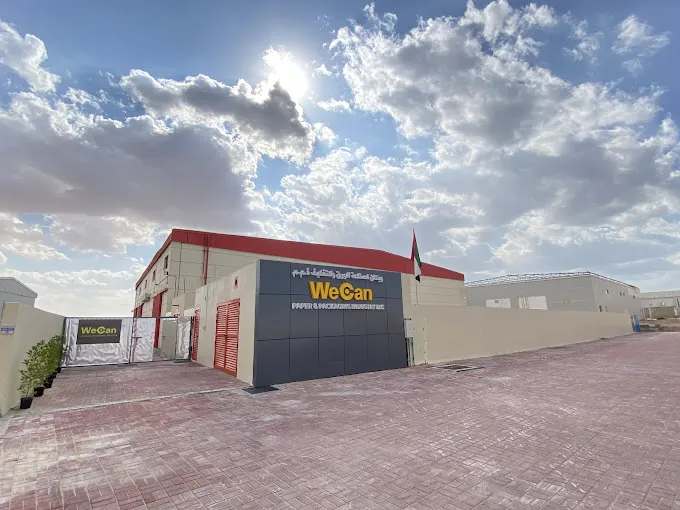
This is how it works with us, from our factory in Umm Al Quwain to customers across the UAE, Saudi Arabia, Oman, Qatar, Bahrain and Kuwait.
Stage 1: Understand the requirement
Everything starts with your product and how it is used. At this stage we need:
- the product or application (what is packed or wound),
- the diameter, and the height or length,
- your expected quantity,
- your current packaging or a sample, if you have one,
- the destination country,
- any special performance requirements.
Rough numbers are fine. A photo of your current pack with a ruler beside it often answers more questions than a long email.
Stage 2: Specify
We recommend the product family and dimensions that suit the requirement, along with the construction: for a can, the liner and the ends; for a core, the wall and length. You receive the recommended specification with a commercial proposal.
If your size falls outside our standard ranges (52–150 mm inner diameter for composite cans, 25–120 mm for paper cores), send it anyway. We will tell you what can be produced.
Stage 3: Sample
Where it is needed, samples are developed or provided for your evaluation. Test them properly: fill them with your real product, run them on your line if you can, and store them in the conditions your product will face. It is much cheaper to find a problem now than after the first production run.
Stage 4: Approve
Once the samples pass, the final dimensions, configuration and commercial terms are confirmed. This is the point to lock everything down in writing:
- dimensions and tolerances,
- liner, ends and closure (or wall and length for cores),
- approved artwork, if the pack is printed,
- packing and palletising requirements,
- delivery terms.
Changes after approval are the most common cause of delays, so take the time to involve everyone who will sign off, including marketing, production and quality.
Stage 5: Manufacture and supply
Approved specifications move into repeat production and delivery across the GCC according to the agreed terms. For recurring supply, share a rolling forecast. Even an approximate three-month view helps plan production and avoids gaps on your line.
Supplying Saudi Arabia and the wider GCC
For deliveries outside the UAE, raise logistics early:
- Delivery city and terms. Confirm where the goods go and who handles each leg.
- Import documents. If your product is regulated, ask your importer which documents they need, and tell us at the start so we can confirm what we can provide.
- Lead time. Allow for transit and customs clearance on top of production time when you plan launches.
Three habits that keep orders on time
- Send complete information once, rather than in pieces across several emails.
- Approve artwork and specifications before production is booked.
- Forecast recurring volumes, even roughly, so capacity is ready when you need it.
Ready to start? Read how we work on our Partner with us page, see where we supply, or go straight to the quote form.